In an era where information is power, the role of the press and media is more crucial than ever. From traditional newspapers to digital news platforms and independent content creators, media entities operate within a legal framework that ensures accountability, ethics, and compliance. One of the essential components of this framework is the Press License.
Press License
What is a Press License?
A Press License is an official authorization issued to media organizations or individuals allowing them to operate and disseminate news, information, or opinions to the public. This license ensures that the entity functions within the legal boundaries defined by national laws and media regulations.
While India doesn’t require every journalist or media house to hold a “press license” in the traditional sense, certain kinds of media operations—especially broadcast media or those seeking government recognition or advertisement support—require registration, accreditation, or licensing through appropriate authorities.
Legal Framework Governing the Press in India
India guarantees freedom of the press under Article 19(1)(a) of the Constitution, which provides the right to freedom of speech and expression. However, this freedom is subject to reasonable restrictions under Article 19(2) for reasons such as:
Sovereignty and integrity of India
Security of the State
Public order
Decency or morality
Contempt of court
Defamation
Incitement to an offence
Some of the main legislations governing press and media include:
Press and Registration of Books Act, 1867
Cable Television Networks (Regulation) Act, 1995
Information Technology Act, 2000
Press Council Act, 1978
Who Needs a Press License in India?
Here are the types of media that may require registration or licensing:
1. Print Media (Newspapers, Magazines)
Must register under the Press and Registration of Books Act, 1867, and obtain a Certificate of Registration from the Registrar of Newspapers for India (RNI).
2. Broadcast Media (TV Channels, Radio Stations)
Requires a license from the Ministry of Information and Broadcasting (MIB) and may also need approval from TRAI and WPC (Wireless Planning & Coordination Wing).
3. Online News Portals & Digital Media
Though not fully regulated yet, they may require self-declaration under new IT Rules 2021, and registration with the Digital Media Ethics Code if monetized or government-advertised.
4. Journalist Accreditation
Not a license, but many journalists seek accreditation from the Press Information Bureau (PIB) for access to government events and information.
Process for Registering a Print Publication (RNI)
Title Verification from RNI
Declaration Filing with District Magistrate
Printing and Publishing the First Issue
Submission of Documents to RNI
Issuance of Certificate of Registration
Key Benefits of a Press License/Registration
Legal recognition of media operations
Access to government press conferences and events
Eligibility for government advertisements
Protection under applicable laws
Credibility and public trust
Consequences of Operating Without a License
Operating a media outlet without proper licensing or registration can lead to:
Legal penalties or bans
Refusal of government ads or recognition
Removal from digital platforms
Defamation or contempt proceedings
Documents Required (for print registration)
Title approval letter from RNI
Copy of the first issue
Affidavit and declaration by the publisher
Printing agreement (if printing is outsourced)
Identity/address proof
Conclusion
While the Indian Constitution protects press freedom, obtaining the right licenses and registration is crucial to ensuring transparency, legal protection, and operational legitimacy. Whether you’re starting a print publication, a TV channel, or a digital news portal, staying compliant with the applicable laws is not just a formality—it’s a foundational step in upholding the integrity of journalism.
The entry of internet has brought the world closer to accessing adult related content but in India, the laws regarding pornography are strict and well-defined.Although the issue of the law can be tricky, it is always necessary to learn what can be done and what may lead to potential criminal responsibility.
pornography laws
What is Pornography?
Pornography refers to explicit material that depicts sexual acts, intended to arouse sexual excitement. In India, the term primarily relates to content that violates decency and morality under various laws.
Key Laws Governing Pornography in India:
1. The Information Technology Act, 2000 (IT Act)
Section 67: Punishes publishing or transmitting obscene material electronically.
Section 67A: Punishes material containing sexually explicit acts.
Section 67B: Specifically prohibits child pornography and sexually explicit material involving minors.
2. Indian Penal Code (IPC), 1860
Section 292: Bans the sale, distribution, or public exhibition of obscene material.
Section 293: Punishes sale or distribution of obscene material to minors.
Section 294: Penalizes obscene acts or songs in public places.
3. The Protection of Children from Sexual Offences (POCSO) Act, 2012
Strictly criminalizes:
Creation
Possession
Distribution of child pornography.
4. Indecent Representation of Women (Prohibition) Act, 1986
Prohibits representation of women in an indecent or derogatory manner in ads, publications, writings, and paintings.
Is Watching Porn Legal in India?
Viewing of adult pornography privately (by adults who consented) is not an offence in black and white.
However, an act of downloading, sharing, production, or transmission of such content can be penalized using IT Act and IPC.
Child pornography is not allowed by any means.
Strictly Prohibited Activities:
Producing pornography
Selling or distributing pornographic material
Publishing or transmitting pornography online
Child pornography (zero tolerance, with severe punishment)
Punishment for Pornography-Related Offenses:
Offense
Relevant Law
Punishment
Transmission of obscene material
IT Act, Sec 67
Up to 3 years + fine
Sexually explicit content
IT Act, Sec 67A
Up to 5 years + fine
Child pornography
IT Act, Sec 67B / POCSO
Up to 7 years or more + fine
Selling obscene materials
IPC Sec 292
Up to 2 years + fine
Indecent representation of women
IRW Act
Fine & imprisonment
Government Action Against Pornography:
The Indian government commonly censors porn sites.
ISPs are intentionally told to prohibit the access of some websites.
Strict control of online contents particularly on child abuse contents.
Tips for Staying Legally Safe:
Do not send or post any pornographic materials.
Do not archive or distribute the child sexual abuse material (CSAM).
Do not share obscene material using messaging applications and social networks.
Be careful of sites which automatically download pornographic material.
Recent Developments:
The government is intensifying cybercrime squads to deal with pornography.
Blocking of websites displaying forbidden materials is usually done by court orders.
There is also debate on the tighter control implementation using online mediums.
Conclusion:
The laws on pornography in India mainly aim at safeguarding moral values in the society and prohibiting child abuse as well as controlling the circulation of obscene materials.Although the consumption of such material among adults might exist in a grey situation, the production or even sharing of such stuff is a severe penalty according to the law of India.
The significance of international law has greatly increased in a world that is becoming more interconnected. It promotes peace, collaboration, and justice globally by regulating the interactions between countries, organizations, and people across national boundaries.
International Law: Meaning, Types & Importance
What is International Law?
A collection of laws, agreements, and treaties that govern interactions between nations, international organizations, and occasionally private citizens is referred to as international law. It regulates matters like trade, military conflict, human rights, territorial conflicts, and the environment.
To put it simply, international law establishes the obligations and rights of states in their dealings with one another and other world players.
Sources of International Law
The following are the main sources of international law:
International Treaties & Conventions Legally binding agreements between countries, such as the Geneva Conventions and the United Nations Charter.
International Customary Law Behaviors that are generally regarded as being required by law, even if they are not documented.
General Principles of Law Major legal systems accept common legal ideas, such as justice and fairness.
Judicial Decisions & Writings Opinions of legal scholars and rulings from international tribunals (such as the ICJ).
Types of International Law
1. Public International Law
This regulates interactions between independent countries and global organizations.
Important areas:
Human Rights Law: Provides worldwide protection for individual rights (e.g., Universal Declaration of Human Rights).
Humanitarian Law: Regulations pertaining to armed conflicts, such as the Geneva Conventions.
Law of the Sea: Oversees maritime matters (such as UNCLOS).
Environmental Law: Focuses on protecting the environment worldwide (e.g., Paris Agreement).
International Criminal Law: Addresses offenses such as crimes against humanity, war crimes, and genocide.
2. Private International Law (Conflict of Laws)
This addresses cross-border conflicts between private parties or companies, including:
International agreements
Custody and divorce cases involving foreign nations
International inheritance disputes
To decide which nation’s law applies, courts use rules.
3. Supranational Law
This is applicable in situations where nations consent to cede some degree of control to a higher authority, like:
European Union Law: Laws that EU members must abide by.
Important International Organizations
United Nations (UN) Principal international organization that fosters collaboration, security, and peace.
International Court of Justice (ICJ) Settles conflicts between states.
World Trade Organization (WTO) Manages international trade regulations and conflicts.
International Criminal Court (ICC) Prosecutes defendants for grave offenses such as war crimes and genocide.
International Monetary Fund (IMF) & World Bank Pay attention to economic and financial matters.
Importance of International Law
Maintains Global Peace & Security: Aids in war prevention and diplomatic dispute resolution.
Protects Human Rights: Protects fundamental liberties everywhere.
Regulates Global Trade: Ensures economic growth and seamless cross-border trade.
Addresses Global Challenges: Pandemics, terrorism, climate change, etc.
Promotes Cooperation: Promotes cooperation in a variety of fields, including research, education, and space.
Challenges of International Law
No international government to enforce it.
Disparity in political power across countries.
National sovereignty issues.
Willingness and diplomatic pressures are necessary for compliance.
Conclusion
The foundation of the global order is international law, which makes sure that interactions between nations and people adhere to accepted norms of justice, equity, and collaboration. International law influences the modern world in many ways, from regulating trade and protecting the environment to defending human rights.
Cheque Bounce in India: Meaning, Causes, Legal Process
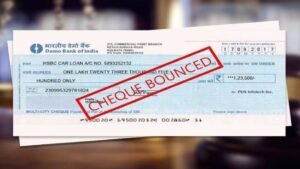
Cheque bounce in India is a common financial offense that occurs when a bank refuses to clear a cheque. This usually happens due to insufficient funds, signature mismatch, or if the account is closed. Under Section 138 of the Negotiable Instruments Act, 1881, cheque bounce is treated as a criminal offense.
When a cheque is dishonoured, the payee must issue a legal notice to the drawer within 30 days. If payment is not made within 15 days, a cheque bounce case can be filed in court. Penalties include up to 2 years of imprisonment, a fine of twice the cheque amount, or both.
The RBI has introduced new rules to penalize repeat offenders, which may affect their credit score. To avoid cheque bounce in India, always maintain sufficient balance and issue cheques carefully. Understanding cheque laws helps prevent legal and financial complications.
Cheque Bounce in India
What is Cheque Bounce?
A cheque bounce occurs when a bank refuses to honour a cheque due to reasons like insufficient funds, signature mismatch, or a closed account. In India, cheque bounce is a criminal offense under Section 138 of the Negotiable Instruments Act, 1881. When a cheque bounces, the payee must send a demand notice to the drawer within 30 days. If the drawer fails to pay the amount within 15 days, the payee can file a legal complaint. Penalties for cheque bounce may include imprisonment, fines, or both. It is important to maintain sufficient funds to avoid cheque bounce and its legal consequences.
New RBI Rule on Cheque Bounce
The Reserve Bank of India (RBI) has introduced a new regulation to strengthen the financial ecosystem by addressing the issue of cheque bounce, which is a common problem affecting both individuals and businesses. The RBI’s updated framework aims to bring more accountability and transparency in cheque transactions and minimize defaults.
Key Highlights of the New Rule:
Mandatory Payment of Penal Charges Banks are now required to levy a penal charge on customers whose cheques bounce due to insufficient funds or other reasons attributable to the drawer. This penal charge is in addition to the existing fees charged by banks for processing a dishonored cheque.
Higher Penal Charges for Repeat Offenders The RBI mandates that if a customer’s cheque bounces multiple times within a financial year, banks must increase the penal charges progressively. This step discourages frequent cheque bounce and promotes financial discipline among account holders.
Transparent Communication Banks must notify customers promptly through SMS or email about the cheque bounce along with the applicable charges. This helps the customer take corrective action quickly and avoid further penalties.
Cap on Penal Charges To protect consumers, the RBI has set an upper limit on the penal charges that banks can impose. The charges must be reasonable and cannot exceed a predefined cap to prevent exploitation.
Encouraging Digital Payments Alongside these measures, the RBI is promoting the use of electronic payments and digital clearing systems to reduce reliance on physical cheques and improve the efficiency of payment settlements.
Impact of the Rule
The new RBI rule aims to reduce the incidence of cheque bounce cases, which can cause financial inconvenience and legal complications. It encourages individuals and businesses to maintain sufficient balance in their accounts before issuing cheques, thereby fostering trust and reliability in financial transactions.
Types of Cheque Bounce
A cheque bounce happens when a bank refuses to honour a cheque due to various reasons such as insufficient funds, signature mismatch, or account issues. Cheques come in different types, and each can be subject to bouncing under specific conditions. Understanding these types helps both issuers and payees avoid problems.
Bearer Cheque Bounce
A bearer cheque is payable to whoever holds the cheque. It is the simplest form of cheque, allowing easy encashment. However, it can bounce if the drawer’s bank account has insufficient funds or if the cheque is damaged or tampered with. Since bearer cheques can be encashed by anyone, they carry a higher risk of misuse.
Order Cheque Bounce
An order cheque is payable to a specific person or entity named on the cheque. It requires endorsement to transfer ownership. Bounce can occur if the drawer’s account lacks funds, if the cheque is stale, or if there is any mismatch in the drawer’s signature or details.
Crossed Cheque Bounce
A crossed cheque has two parallel lines on its top left corner, indicating it must be deposited directly into a bank account and cannot be cashed over the counter. Bouncing can occur if the payee’s account details are incorrect, the drawer’s account has insufficient balance, or if the cheque is post-dated or stale.
Post-Dated Cheque (PDC) Bounce
A post-dated cheque is issued for a future date. If presented before the date or if funds are unavailable when the cheque is processed on the specified date, it will bounce. PDCs are common in loan repayments and business transactions, making timely fund management critical.
Stale Cheque Bounce
A stale cheque is one presented after its validity period, typically three months from the date of issue. Banks reject stale cheques, causing a bounce, as they are no longer valid instruments of payment.
Common Reasons for Cheque Bounce in India
Cheque bounce, also known as cheque dishonor, occurs when a bank refuses to honor a cheque presented for payment. In India, this issue is governed by the Negotiable Instruments Act, 1881, which treats cheque bounce as a criminal offense under Section 138. Understanding the common causes behind cheque bounce can help individuals and businesses avoid financial and legal troubles.
Insufficient Funds: The most frequent reason is that the drawer’s bank account does not have enough balance to cover the cheque amount.
Account Closed: If the drawer’s bank account has been closed before the cheque is presented, the cheque will be dishonoured.
Signature Mismatch: If the signature on the cheque does not match the specimen signature recorded by the bank, the cheque is liable to bounce.
Post-Dated Cheque Presented Early: If a cheque dated for a future date is presented before the date mentioned, the bank will not honour it.
Stale Cheque: Cheques presented after the validity period (usually 3 months from the date of issue) are considered stale and will be dishonoured.
Cheque Amount Mismatch: If the amount written in words and figures differ, the cheque may be rejected by the bank.
Alterations on Cheque: If there are any unauthorized corrections or overwriting on the cheque, banks usually bounce it.
Technical Errors: Errors like missing signatures, incomplete cheque details, or torn cheque leaves can lead to cheque dishonour.
Legal Provisions Related to Cheque Bounce in India
Cheque bounce, also referred to as dishonour of cheque, is a significant issue addressed under the Negotiable Instruments Act, 1881, specifically under Section 138 and related sections. It is considered a criminal offense in India to ensure the reliability of cheques as a payment method.
Section 138 of the Negotiable Instruments Act, 1881
Section 138 deals with the punishment for dishonouring a cheque due to insufficient funds, account closure, or any discrepancy that causes the bank to refuse payment. When a cheque is bounced, the payee receives a Cheque Return Memo from the bank indicating the reason for dishonour.
Procedure Under Section 138:
Issuance of Legal Notice: The payee or holder of the cheque must send a written legal notice to the drawer within 30 days of receiving the cheque return memo. This notice demands payment of the cheque amount.
Time for Payment by Drawer: Upon receipt of the legal notice, the drawer has 15 days to make the payment of the cheque amount.
Filing Complaint: If the drawer fails to pay within the stipulated time, the payee can file a complaint in the competent Magistrate Court within one month from the expiry of the 15-day period.
Punishment
If found guilty under Section 138, the drawer may face:
Imprisonment for a term which may extend to two years, or
A fine which may extend to twice the amount of the cheque, or
Both imprisonment and fine.
Other Relevant Sections:
Section 142: Specifies that courts can take cognizance of the offense only upon a complaint filed by the payee or holder in due course.
Section 143: Details the trial procedure, empowering courts to summon witnesses and conduct the trial in a summary manner to ensure swift justice.
Importance
The strict provisions ensure financial discipline and encourage individuals and businesses to honor their cheque payments, maintaining trust in negotiable instruments.
Penalty for Cheque Bounce in India
Cheque bounce is a criminal offense under Section 138 of the Negotiable Instruments Act, 1881. When a cheque is dishonoured due to insufficient funds, a closed account, or other valid reasons, the drawer (person who issued the cheque) faces legal consequences.
Legal Procedure and Penalty:
After the cheque bounces, the payee receives a Cheque Return Memo from the bank. The payee must send a written legal notice to the drawer within 30 days of receiving the memo, demanding payment of the cheque amount. The drawer then has 15 days to make the payment.
If the drawer fails to pay within this period, the payee can file a complaint in a Magistrate Court within the next one month.
Punishment:
The court may impose the following penalties on the drawer:
Imprisonment for up to 2 years, or
A fine up to twice the amount of the cheque, or
Both imprisonment and fine.
This law ensures that cheques are honored and promotes financial discipline. The punishment acts as a deterrent against issuing cheques without sufficient funds.
Cheque Bounce Legal Process in India
Cheque bounce, legally termed as dishonour of cheque, is governed by Section 138 of the Negotiable Instruments Act, 1881. It is a criminal offense to issue a cheque that is dishonoured due to reasons such as insufficient funds, account closure, or mismatch of signature. The law aims to ensure trust and credibility in financial transactions involving cheques.
Cheque Presentation and Dishonour
When a cheque is presented to the bank for encashment or deposit, the bank verifies the drawer’s account. If there are insufficient funds or other reasons (like a closed account), the cheque is dishonoured or bounced. The bank issues a Cheque Return Memo to the payee, specifying the reason for non-payment.
Issuance of Legal Notice by Payee
After receiving the return memo, the payee must send a legal notice to the drawer within 30 days. This notice demands payment of the cheque amount and acts as a formal communication alerting the drawer of the dishonour and requesting settlement.
Payment Period for Drawer
The drawer then has 15 days from the date of receipt of the legal notice to pay the cheque amount to the payee. This window provides an opportunity for the drawer to settle the matter without court intervention.
Filing a Complaint
If the drawer fails to make the payment within 15 days, the payee can file a criminal complaint under Section 138 in the appropriate Magistrate Court. The complaint must be filed within one month from the expiry of the 15-day period.
Trial and Punishment
The court takes cognizance of the complaint and initiates a summary trial. The drawer may be summoned to appear and defend themselves. If found guilty, the drawer can face:
Imprisonment up to 2 years, or
Fine up to twice the cheque amount, or
Both imprisonment and fine.
Documents Required for Filing Cheque Bounce Case
Filing a cheque bounce case under Section 138 of the Negotiable Instruments Act, 1881 requires submitting certain key documents to the Magistrate Court. These documents are essential to prove the dishonour of the cheque and the steps taken to recover the amount.
Original Cheque
The original bounced cheque is the most crucial document. It serves as primary evidence that the cheque was issued by the drawer and was presented for payment.
Cheque Return Memo
Issued by the bank, this memo confirms that the cheque has bounced. It contains the date of dishonour and the reason, such as “insufficient funds” or “account closed.” This memo is vital to establish that the cheque was dishonoured for valid reasons.
Legal Notice
A copy of the legal notice sent to the drawer within 30 days of receiving the cheque return memo. This notice demands payment of the cheque amount. Proof of sending the notice (such as postal receipts or acknowledgment receipts) must be attached to show the drawer was formally informed.
Proof of Delivery of Notice
Documents proving that the legal notice was received by the drawer, such as signed acknowledgment cards (if sent by registered post), courier receipts, or any written communication from the drawer.
Bank Statements (Optional but Helpful)
Sometimes, payees may attach their bank statements showing that the cheque was presented and bounced, strengthening the case.
Complaint Petition
The formal written complaint filed before the Magistrate Court, outlining the facts, cheque details, dishonour, and legal provisions invoked.
Civil Remedy for Cheque Bounce in India
Cheque bounce is primarily addressed as a criminal offense under Section 138 of the Negotiable Instruments Act, 1881. However, the payee of a dishonoured cheque can also pursue civil remedies to recover the amount due. Civil remedies focus on the recovery of the cheque amount as a debt, rather than punishing the drawer.
Filing a Civil Suit for Recovery
The payee can file a civil suit for recovery of money in the appropriate civil court, claiming the cheque amount as a debt or breach of contract. The cheque acts as proof of an agreement and liability of the drawer to pay the specified amount.
Key Aspects of Civil Remedy:
No Mandatory Legal Notice: Unlike the criminal process, filing a civil suit does not legally require sending a prior legal notice to the drawer, though it is advisable to do so for better chances of settlement.
Proof of Debt: The burden of proof is on the payee to demonstrate that the cheque amount is owed by the drawer and that the cheque was dishonoured.
Time-Consuming Process: Civil suits generally take longer to resolve compared to criminal proceedings under Section 138, but they offer a direct way to claim the money.
Monetary Compensation: The civil court can order the drawer to pay the cheque amount along with interest and damages, if applicable.
Execution of Decree: Once the court passes a decree in favor of the payee, it can be executed to recover the money from the drawer’s assets.
Advantages of Civil Remedy:
It provides a straightforward way to recover the cheque amount and related damages.
Suitable where the drawer admits the debt but avoids payment.
Does not involve imprisonment or criminal prosecution, focusing on financial recovery.
How to Avoid Cheque Bounce Cases?
Cheque bounce cases can lead to serious legal troubles, financial penalties, and damage to personal or business reputation. However, most cheque bounce incidents are avoidable by following some simple and practical precautions.
1. Maintain Sufficient Funds in Your Account
The primary reason for cheque bounce is insufficient funds. Always ensure your bank account has enough balance to cover the cheque amount before issuing it. Regularly monitor your account balance through online banking, mobile apps, or bank statements to avoid any shortfall.
2. Keep a Record of Issued Cheques
Maintain a cheque register or use accounting software to track all issued cheques. Record details like cheque number, date, amount, and payee’s name. This prevents issuing duplicate cheques or exceeding the available balance.
3. Verify Cheque Details Before Issuing
Double-check every detail on the cheque before signing: the payee’s name, amount in words and figures, date, and your signature. Any mismatch or errors, such as spelling mistakes or incorrect dates, can cause the cheque to be dishonoured.
4. Avoid Presenting Post-Dated Cheques Early
If you issue post-dated cheques, inform the payee of the correct date and ensure sufficient funds are available on that date. Do not allow the cheque to be presented before the date written on it, as it will be rejected.
5. Avoid Alterations on Cheques
Never make corrections, overwriting, or tampering on a cheque. Banks generally reject cheques with alterations. If you make a mistake, issue a new cheque instead.
6. Update Your Signature with the Bank
If your signature changes, promptly update it with your bank. Signature mismatches are common reasons for cheque bounce.
7. Communicate Proactively with the Payee
If you anticipate any issue in clearing a cheque, communicate with the payee in advance. You may arrange alternative payment methods or reschedule payments to avoid dishonour.
Conclusion
In India, check bounce can result in serious legal and financial issues. Payees and drawers need to understand their rights and obligations. When a check bounces, prompt legal action is essential, and speaking with a legal professional can facilitate a speedy conclusion.